Zoho • 12 MIN READ
Zoho Books vs Xero: which is better for Australian small business?
Xero is the default for Aussie accountants. Zoho Books is cheaper and plays nicely with Zoho CRM. An honest comparison of pricing, payroll, BAS and day-to-day use.
Practical guides on Zoho CRM, websites and growth for Australian businesses, written by the Vixo team in Forestville, NSW. See related services →
The short answer
If you employ staff and want payroll and super in the same place as your books, Xero is still the easier choice in Australia. If you're a small team without complicated payroll, you already use Zoho CRM (or plan to), and you'd like to keep software costs down, Zoho Books deserves a serious look. Most of the decision comes down to three things: payroll, your accountant, and how much it's worth to you to have sales and finance in one ecosystem.
The prices below come from each vendor's Australian pricing page as of September 2026. They do change, so check before you commit.
Pricing at a glance (AUD)
Xero
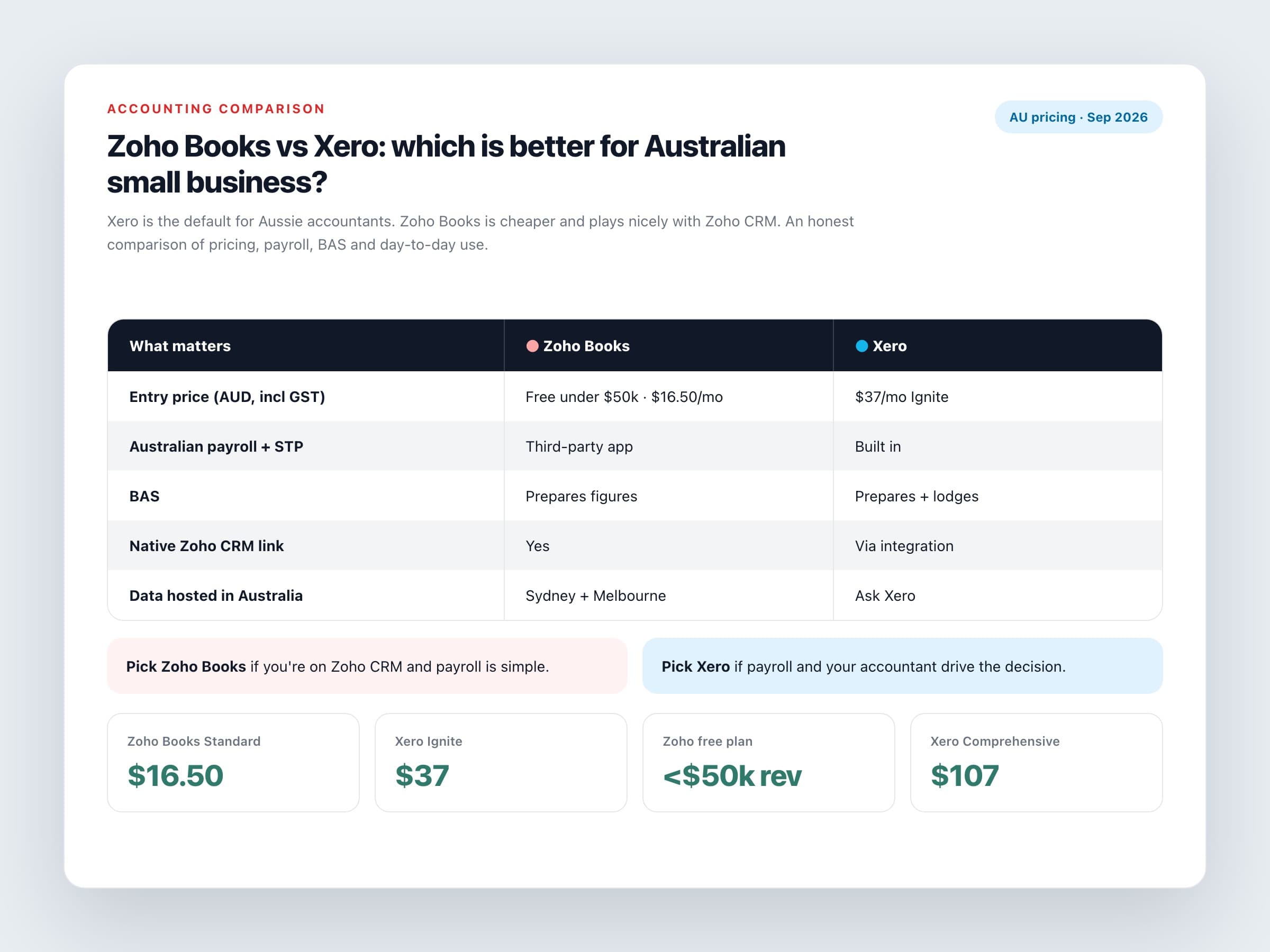
From 1 July 2026, Ignite is $37 a month, Grow is $78 and Comprehensive is $107, all including GST. Payroll is now bundled in: Ignite covers one person, Grow covers two and Comprehensive covers up to five. Ignite also limits how many invoices you can send each month.
Zoho Books
There's a free plan for businesses with revenue under $50,000 a year. Standard is $16.50 a month billed annually ($19.80 monthly), Professional is $33 and Premium is $44, with Elite and Ultimate tiers above that for inventory-heavy businesses. Prices include GST, and every plan has a yearly invoice cap (5,000 on Standard).
Where Xero wins
Xero's real advantages here
Payroll and super
Xero runs native Australian payroll with Single Touch Payroll reporting. Zoho Payroll isn't available in Australia, so Zoho Books users need a separate payroll product such as Employment Hero.
Your accountant already knows it
Most Australian bookkeepers and accountants know Xero inside out. That saves time at EOFY and cuts down the 'where do I find this?' emails.
Local app ecosystem
Australian industry apps, such as job management and practice management tools, tend to build their Xero integration first.
Bank feeds
Xero's direct feeds with Australian banks are mature. Zoho Books supports the major banks, but coverage of smaller banks and credit unions is thinner, so check yours before you switch.
Where Zoho Books wins
Zoho Books' real advantages
Cost
For a micro business, the free plan is genuinely usable, and the paid tiers cost less than half of Xero's equivalent plans.
Native link to Zoho CRM
Quotes, invoices and payment status sit right next to the deal, with no connector to maintain.
Automation and customisation
You get custom fields, workflow rules, approval flows and custom functions. Xero is more opinionated and less configurable.
Data hosted in Australia
Zoho accounts on the Australian domain are hosted in Sydney, with Melbourne as backup. That's handy when clients ask where their data lives.
Zoho One bundle
If you're already licensing Zoho One, Books is included in what you pay.
Pick your accounting system around payroll and your accountant first. Features come second.
GST and BAS
Both handle Australian GST properly: GST-inclusive or exclusive pricing, GST-free items, cash or accruals basis, and monthly or quarterly reporting. The real difference is lodgement. Xero can lodge activity statements with the ATO directly. Zoho Books works out the BAS figures, then you or your agent lodge them through the ATO's online services and mark the return as filed in Books. Plenty of businesses have an agent lodge anyway, so this matters less than it sounds.
A simple way to decide
Choose Xero if
Payroll is a big part of your admin
You pay more than a couple of people and want pay runs, super and STP in one place.
Your accountant insists
That relationship is worth more than a few dollars a month in savings.
You depend on a Xero-only app
Some industry tools only connect to Xero, and swapping them out isn't realistic.
Choose Zoho Books if
You're already on Zoho
Zoho CRM or Zoho One is already in place, and you want finance connected without extra tools.
Payroll is simple
Or it's already handled by a separate payroll provider you're happy with.
You want workflows your finance tool can actually run
Approvals, custom fields and automation, built around how you work.
Still on the fence? Talk to your accountant before you talk to the sales rep, and ask what it would cost them to support each option. If you stay on Xero, you can still connect it to Zoho CRM. It's one of the most common setups we build.
