Zoho • 11 MIN READ
Best CRM for tradies: Zoho CRM and FSM vs ServiceM8
ServiceM8 is the go-to job app for a lot of Aussie trades. Zoho CRM with Zoho FSM suits a different kind of trade business. Here's how to tell which one is yours.
Practical guides on Zoho CRM, websites and growth for Australian businesses, written by the Vixo team in Forestville, NSW. See related services →
Two tools for two different kinds of business
ServiceM8 was built for trades from the ground up. Quote, schedule, job card, photos, invoice, done. Plenty of electricians, plumbers and HVAC businesses run on it and are perfectly happy. Zoho CRM paired with Zoho FSM (field service management) is a broader setup, covering the sales pipeline, service contracts, scheduling and dispatch, with the option to connect it to the rest of Zoho. The real question isn't which one is better. It's how your business wins work and keeps it.
What they cost
Pricing as of September 2026
ServiceM8
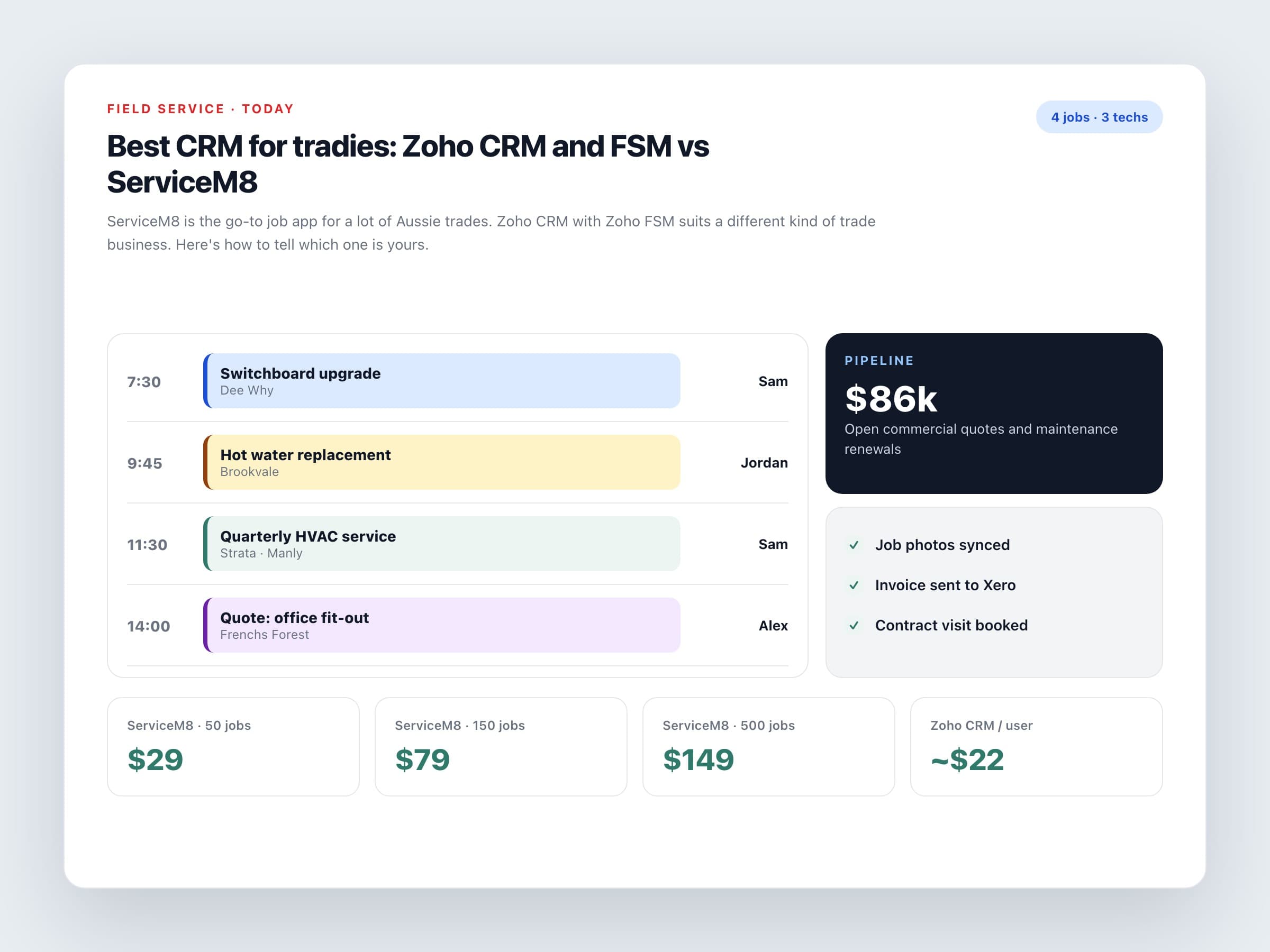
Priced by jobs per month, not by users. Starter is $29 a month for 50 jobs, Growing is $79 for 150 and Premium is $149 for 500, in AUD including GST. Paid plans include unlimited users, which is great for crews.
Zoho FSM and Zoho CRM
Zoho FSM is priced on appointment volume and starts at around US$30 a month for the Standard edition, rising as you book more appointments. Zoho CRM is extra, from about $22 per user a month, unless you're on Zoho One, which includes both.
For a crew of two to five people doing mostly reactive work, ServiceM8 is very hard to beat on price.
Where ServiceM8 shines
Why so many tradies use it
Quick setup
You can be sending quotes the same day, with very little configuration.
Built for the van
The mobile app is the product. Job photos, signatures, forms and safety documents (on higher plans) are right where your techs need them.
Accounting links
Its Xero and MYOB integrations are mature, and most Australian bookkeepers already know them.
Crew-friendly pricing
Taking on an apprentice doesn't mean paying for another licence.
Where Zoho CRM and FSM make more sense
Signs you've outgrown a job app
You sell before you service
Commercial tenders, builder relationships, maintenance contracts and quotes that go back and forth for weeks need a proper sales pipeline. ServiceM8 isn't really a sales CRM.
Recurring maintenance
Service contracts, asset histories and scheduled preventive visits are at the core of Zoho FSM.
Several teams or regions
Territory-based dispatch, separate divisions and deeper reporting are easier to manage in Zoho.
One system for the office
With Zoho One, marketing, help desk, accounting and HR can all come from the same vendor.
An unusual process
If your workflow doesn't fit the standard mould, Zoho lets you build it. ServiceM8 asks you to work its way.
If most of your work comes from the phone ringing, ServiceM8 is probably enough. If it comes from relationships and contracts, you need a CRM.
A hybrid setup that works
Some trade businesses run both. Zoho CRM handles the sales side (builders, strata managers, facility managers and tenders) and ServiceM8 runs the jobs. Won deals are pushed into ServiceM8 as jobs through an integration, and invoices land in Xero. There are more moving parts, but each tool gets to do what it's good at.
Questions to answer before you choose
Be honest about these
Volume
How many jobs do you do a month, and how many people need access?
Revenue mix
What share of your revenue comes from maintenance contracts or repeat commercial clients?
Sales cycle
Do you quote on the spot, or track tenders and proposals over weeks?
Ownership
Who in the office will own the system and keep it tidy?
Accounting
Does your accountant need Xero, MYOB or Zoho Books?
